
How to Get Rid of Alcohol Breath: Causes and Quick Fixes
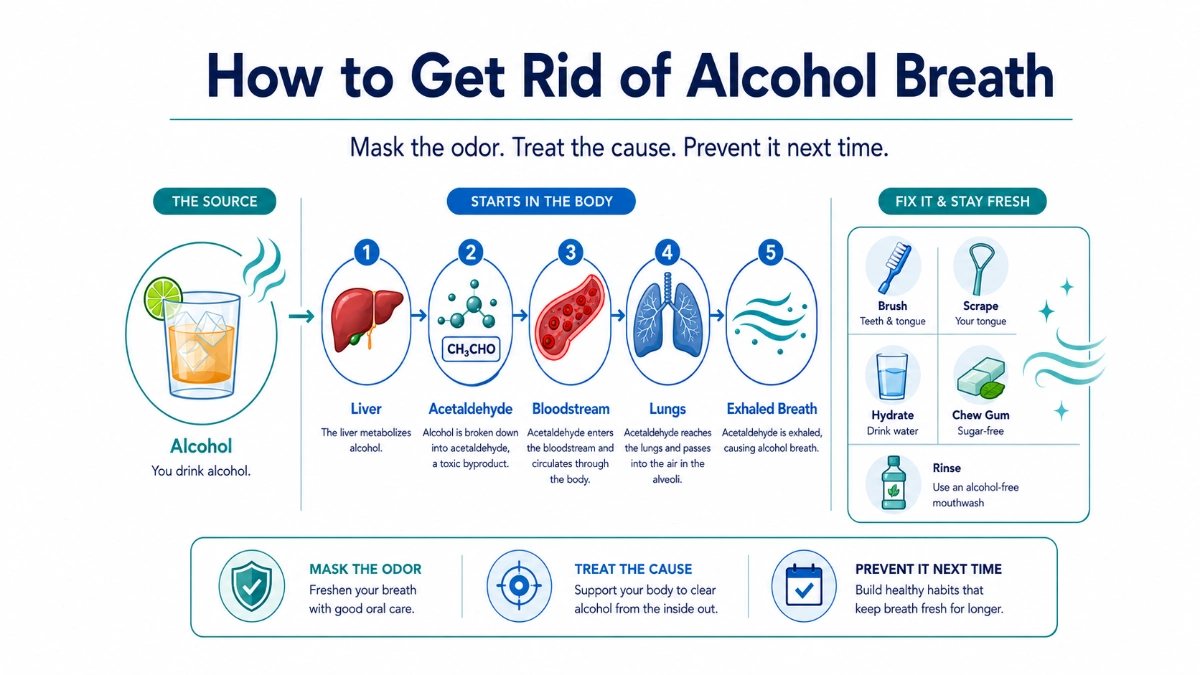
Alcohol breath does not start in your mouth. Your liver breaks alcohol down into acetaldehyde. Your lungs then exhale it with every breath.
Brushing clears the surface but cannot reach what your lungs release. Three oral health problems drag the smell out for hours. Dry mouth, bacterial shifts, and pH imbalance keep feeding the odor.
Quick fixes only briefly cover the smell of alcohol. Fixing the root cause stops it from returning.
This guide covers fast masking tricks, the science behind the smell, and a plan to freshen your breath.
TL;DR
Five takeaways cover how to get rid of alcohol breath fast and for good.
- Water, gum, and mints mask alcohol breath but do not remove it.
- Acetaldehyde from your lungs creates the smell, not your mouth.
- Alcohol breath lasts 12–24 hours, based on how much you drank.
- Dry mouth, microbiome shifts, and pH imbalance make the smell linger.
- A three-stage fix (mask, treat, prevent) beats any single remedy.
Quick Fixes to Combat Alcohol Breath
These five remedies reduce alcohol breath within minutes. They work on the surface smell, not the source. The main odor comes from your lungs. No single tip removes alcohol on your breath entirely.
Drink Water
Water rinses alcohol residue from your mouth and throat. Alcohol is a diuretic. It pulls fluid from your body and dries out your mouth.
Within about 20 minutes of your first drink, urine output climbs and saliva drops. Hydration will not erase the lung odor. It limits the dry mouth that makes breath worse by morning.
Sip water between drinks to slow the dehydration. Then, drink a full glass the next morning to restart saliva flow.
Chew Sugar-Free Gum
Chewing gum triggers saliva, your mouth’s built-in rinse. Saliva flushes bacteria and neutralizes the acids behind the unpleasant smell. More saliva means a cleaner and less acidic mouth.
Pick a sugar-free gum with xylitol. A Frontiers in Nutrition study found xylitol cuts Streptococcus mutans, a key acid-producing microbe. Xylitol starves these microbes because they cannot ferment it into acid.
Sugar-based gum does the opposite and feeds those bacteria.
Brush Your Teeth and Tongue
Brush your teeth to clear food debris and surface bacteria. Then scrape your tongue. The tongue carries a thick bacterial film that produces most mouth odor.
A Cochrane review found tongue scraping cut volatile sulfur compounds by 40–42%, against 33% for brushing alone. One study reached a 75% drop. A scraper clears what a toothbrush misses.
Morning is the best time because bacteria build up overnight.
Use Alcohol-Free Mouthwash
Skip the alcohol-based mouthwash after drinking. Alcohol strips moisture from the soft tissue in your mouth. That worsens the dry mouth already caused by alcohol.
Alcohol-based mouthwash dries and irritates oral tissue, according to a study in the Australian Dental Journal. An alcohol-free rinse cleans without the rebound.
Choosing the right mouthwash matters more the morning after a long night.
Your mouth is already low on saliva after a night out. CariFree Maintenance Rinse is alcohol-free and uses pH+ technology to restore balance while it freshens breath.
Eat Strong-Flavored Foods
Peanut butter, parsley, and coffee beans carry strong aromatic oils. Those oils cover the acetaldehyde odor for a short time.
Peanut butter is the most cited option. Its thick, oily texture coats the mouth and throat. The effect fades within about 20 minutes.
These foods mask the smell of alcohol and do nothing to address the source. Skip the peanut-butter-beats-a-breathalyzer myth because the device measures alcohol, not odor.
Why Does Alcohol Make Your Breath Smell?
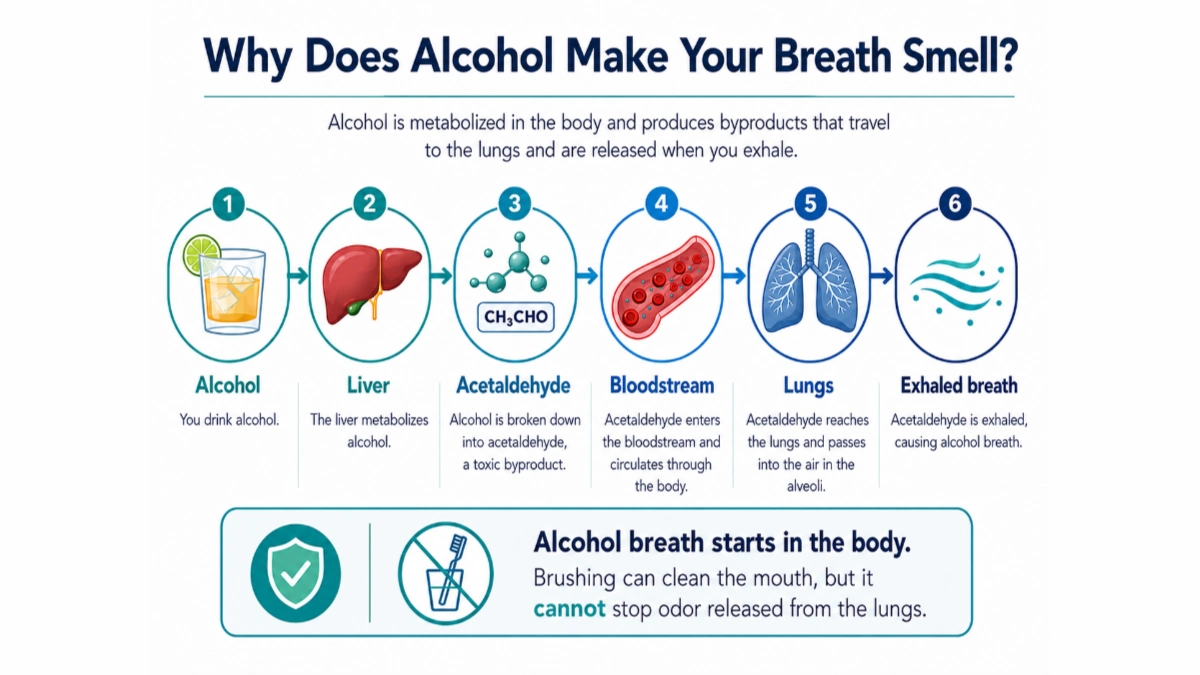
Alcohol breath comes from your lungs, not your mouth. Alcohol makes your breath smell because your liver turns it into acetaldehyde. Your lungs exhale that acetaldehyde with every breath.
Acetaldehyde carries a sharp, sweet chemical smell. Almost none of it comes from your mouth.
Brushing clears the surface but cannot stop what your lungs release. Alcohol breath is a form of halitosis that starts inside the body. It differs from the everyday bad breath caused by mouth bacteria.
Your body clears alcohol at a slow and steady pace. The more you drink alcohol, the more acetaldehyde your body makes. A bigger pour means a stronger, longer smell.
Genetics also explain why some people smell worse than others on the same drinks. People with an ALDH2 gene variant break down acetaldehyde slowly. That buildup gives them a stronger odor.
How Long Does Alcohol Stay on Your Breath?
Alcohol stays on your breath for 12–24 hours after your last drink. Your alcohol metabolism clears about one standard drink per hour. Heavier drinking pushes the smell toward the upper end of that range.
Light drinking of one or two drinks can fade in 6–12 hours. Six or more drinks can keep alcohol detectable past 24 hours. The timeline is a range, not a fixed clock.
Several factors stretch or shorten the window. Body weight, the amount of alcohol you drank, and the type of alcohol all shift the timeline. Food and water during the night shorten it.
Eating before you drink lowers your peak blood alcohol. A light meal can cut that peak by about 28%, and a heavy meal by about 65%. Less alcohol to process means the smell fades sooner.
The alcohol smell can linger even after you feel sober. Plan around the upper end before a morning commitment. A late, heavy night can still show by breakfast.
Three Reasons Alcohol Breath Is Hard to Fix
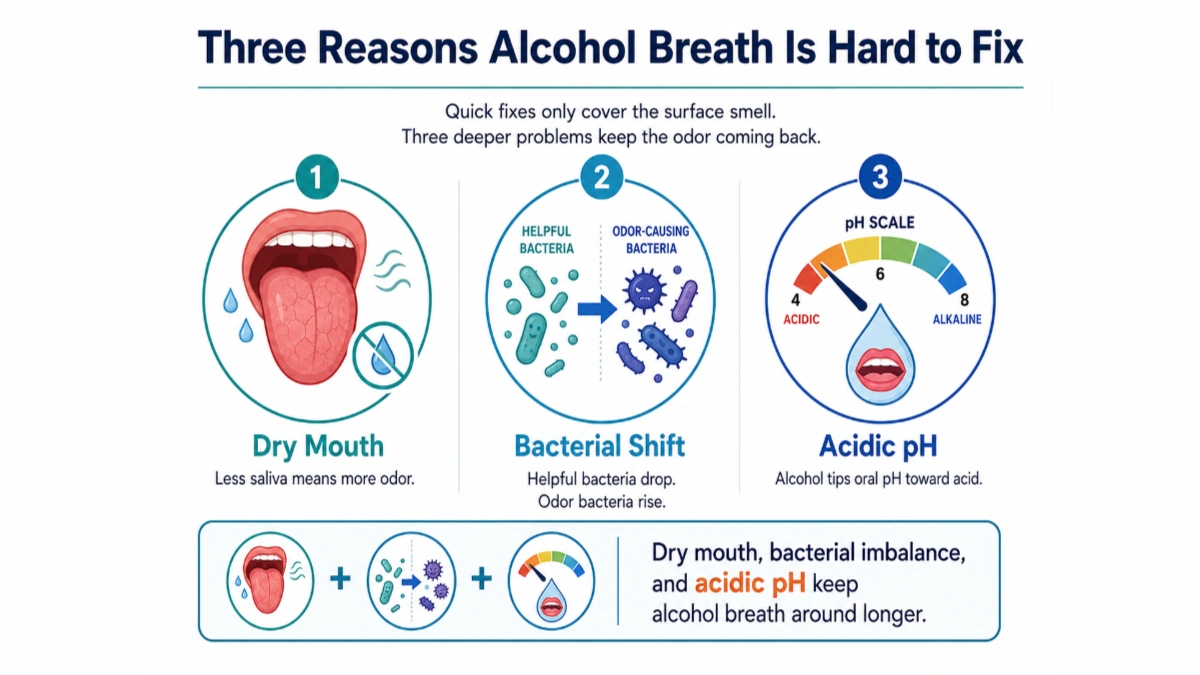
Quick fixes wear off because they only cover the surface smell. Three deeper problems keep the odor coming.
Alcohol dries your mouth, disrupts your oral bacteria, and tips your pH toward acid. These effects of alcohol feed the smell long after your last drink.
Dry Mouth and Saliva Loss
Alcohol suppresses antidiuretic hormone, or ADH. ADH signals your kidneys to hold water. Without it, your body flushes fluid faster and your mouth dries out.
Dry mouth removes your main defense against odor. Saliva is your mouth’s rinse cycle. It washes away bacteria and neutralizes acid.
Odor bacteria thrive when saliva runs low. These anaerobic microbes break down proteins into volatile sulfur compounds, or VSCs. The VSCs are the gas you smell.
A study in Scientific Reports measured the bad-breath threshold. It sits at 65.79 ppb for women and 79.94 ppb for men. In that study, 90.6% of people with bad breath also had gum disease.
The same dryness drives the alcohol and dry mouth connection.
Oral Microbiome Disruption
Alcohol throws off the balance of bacteria in your mouth. A study in Frontiers in Cellular and Infection Microbiology tested this in animals. Alcohol exposure nearly doubled oral microbial diversity.
More diversity sounds healthy. Here it is not. The rise came from pathogenic species moving into a once-balanced mouth.
Beneficial bacteria like Haemophilus and Streptococcus dropped. Harmful groups like Romboutsia and Bacteroidota climbed. The Shannon diversity score jumped from 2.319 to 3.908.
Alcohol drives the shift by weakening neutrophils. Neutrophils are the immune cells that keep harmful bacteria in check. Weakened defense means more odor-producing microbes.
The new bacterial mix produces more volatile sulfur compounds. That is the chemistry behind a smell that masking cannot beat. A rinse that supports a balanced mouth targets this root cause.
Alcohol and bad breath connect through these microbes, beyond the lungs alone.
pH Imbalance in Your Mouth
Alcohol pushes your oral pH toward acid. A resting mouth sits near neutral, around 6.7–7.4. Less saliva and acidic drinks lower it.
Anaerobic bacteria love an acidic, low-oxygen mouth. Those are the microbes that pump out sulfur gas. The more acidic your mouth, the more they produce.
Restoring a neutral pH starves the bacteria behind the smell. A neutral pH fixes the cause, not the symptom. CariFree’s pH+ technology restores a neutral mouth and removes that edge.
Acid also feeds tooth and gum problems that worsen breath. Below pH 5.5, enamel starts to lose minerals. A balanced mouth protects breath and teeth at once.
How to Get Rid of Alcohol Breath for Good
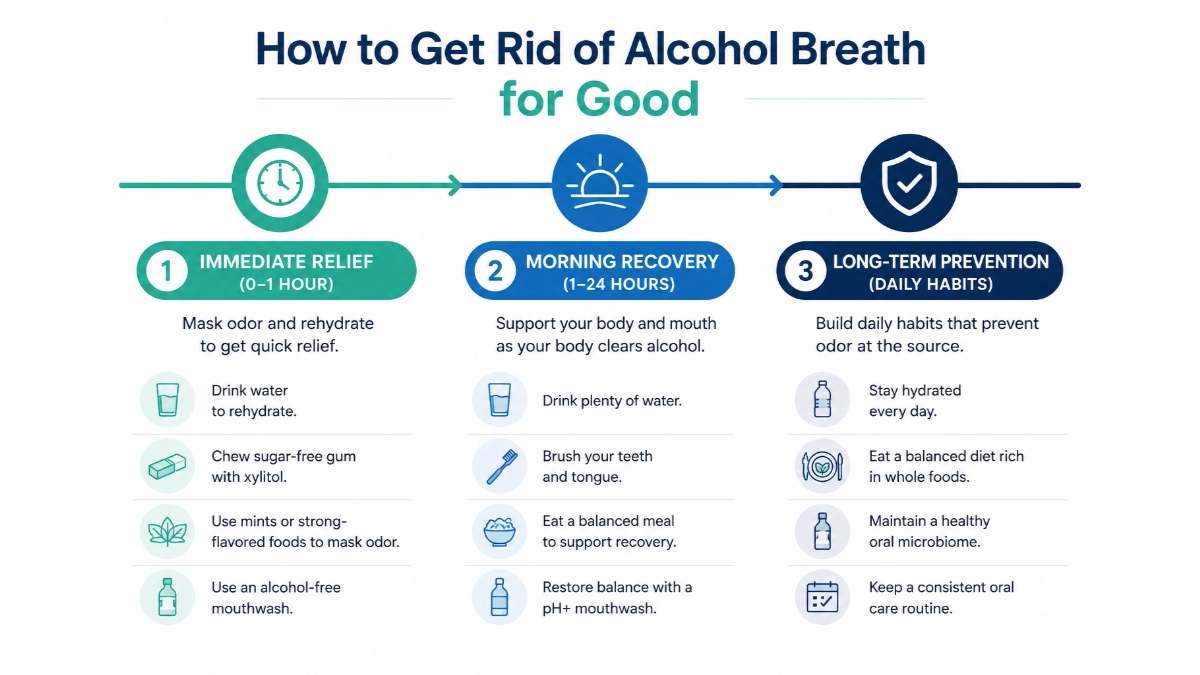
No single tip can eliminate alcohol breath on its own. The smell has more than one source. The best plan works in three stages.
First mask the surface smell. Next, treat the cause of bad breath. Then prevent the next round.
Immediate Relief
Start during the event, not the morning after. Drink water between each round to stay ahead of dry mouth. Chew xylitol gum and carry CariFree Breath Mints for saliva and pH support.
Also, eat before and while you consume alcohol. Food slows how fast alcohol hits your blood and trims the acetaldehyde load.
Eating matters most for tomorrow’s breath. That smaller acetaldehyde load tonight means a milder smell in the morning.
Morning Recovery
Run a full oral care routine first thing. Brush your teeth and scrape your tongue to clear the overnight bacterial film. Tongue scraping does the heavy lifting here.
Why? Because it removes the bacteria that built up while saliva slowed overnight. Rinse with an alcohol-free mouthwash. CariFree Maintenance Rinse targets dry mouth and pH at the same time.
Drink a full glass of water before anything else. Then, eat breakfast to restart saliva and fuel your liver. Food gives your body what it needs to clear the remaining acetaldehyde.
Skip coffee as your fix. It dries the mouth and works against you. For more relief, try these dry mouth relief tips.
Long-Term Prevention
Alcohol breath hits harder when your mouth starts weak. A dry, acidic baseline gives bacteria a head start every time you drink. To prevent alcohol breath long-term, build a daily routine that holds your pH steady.
Make alcohol-free oral care your everyday default, even when you are not drinking. Alternate each drink with water at events to keep saliva flowing. Strong saliva and a balanced pH blunt how much alcohol disrupts your mouth.
Keep a travel-sized rinse on hand for nights away from home. Prevention will not stop the lung odor entirely. It shortens how long the smell sticks around.
Freshen Up with CariFree
Dr. Kim Kutsch practiced dentistry for 40 years and created CariFree. The alcohol-free line never adds to dry mouth. Its pH+ formula resets an acidic mouth and supports the good bacteria alcohol strips out.
Start with the Maintenance Rinse for daily and morning-after care. Add Breath Mints for fresh breath on the go.
Explore CariFree products to match the right fit to your routine.
FAQs About Alcohol and Bad Breath Remedy
Quick answers to common questions about alcohol consumption and ways to avoid alcohol breath.
Can You Smell Vodka on Someone’s Breath?
Yes, you can smell vodka on someone’s breath. Vodka smells milder than beer or wine because distillation strips out the aroma compounds called congeners. The ethanol itself still carries a faint odor up close.
Does Coffee Help Reduce Alcohol Breath?
Coffee can mask alcohol breath for a few minutes with its strong aroma. The effect fades fast because coffee is a diuretic that deepens dry mouth. Water clears the smell better without drying you out.
Does Alcohol Kill Bad Breath?
No, alcohol does not kill bad breath. Alcohol-based mouthwash kills some surface bacteria but dries your mouth and speeds their return. An alcohol-free rinse cleans without that rebound.
How Do You Get Rid of Alcohol Breath the Next Morning?
Get rid of alcohol breath the next morning with a full oral care routine. Tongue scraping matters most because it strips the overnight bacterial film. Follow it with an alcohol-free rinse, a glass of water, and breakfast.
Does Alcohol Cause Long-Term Bad Breath?
Yes, regular drinking can cause long-term bad breath. Alcohol disrupts the oral microbiome and dries the mouth over time. Daily alcohol-free, pH-balanced care curbs both the damage and the smell.