
Dry Mouth After Tooth Extraction: Causes and Relief

Dry mouth after a tooth extraction is normal. Most people feel it within hours of the procedure.
Anesthesia, pain medication, and mouth breathing all cut saliva flow during recovery. The dryness fades in hours to days for most people.
But saliva does more than keep your mouth comfortable. It shields the extraction site from bacteria and acid while the wound heals.
This guide covers the causes, the recovery timeline, the dry socket difference, and relief that protects healing.
At a Glance
Dry mouth after a tooth extraction follows a predictable pattern.
- Expect dry mouth to fade within hours to days after a tooth extraction.
- Trace the dryness to anesthesia, pain medication, and mouth breathing.
- Check the recovery timeline to see what counts as normal at each stage.
- Compare dry mouth and dry socket before you call your dentist.
- Protect the extraction site with hydration, xylitol products, and a humidifier.
- Call your dentist if dry mouth lasts more than one week.
What Causes Dry Mouth After Tooth Extraction
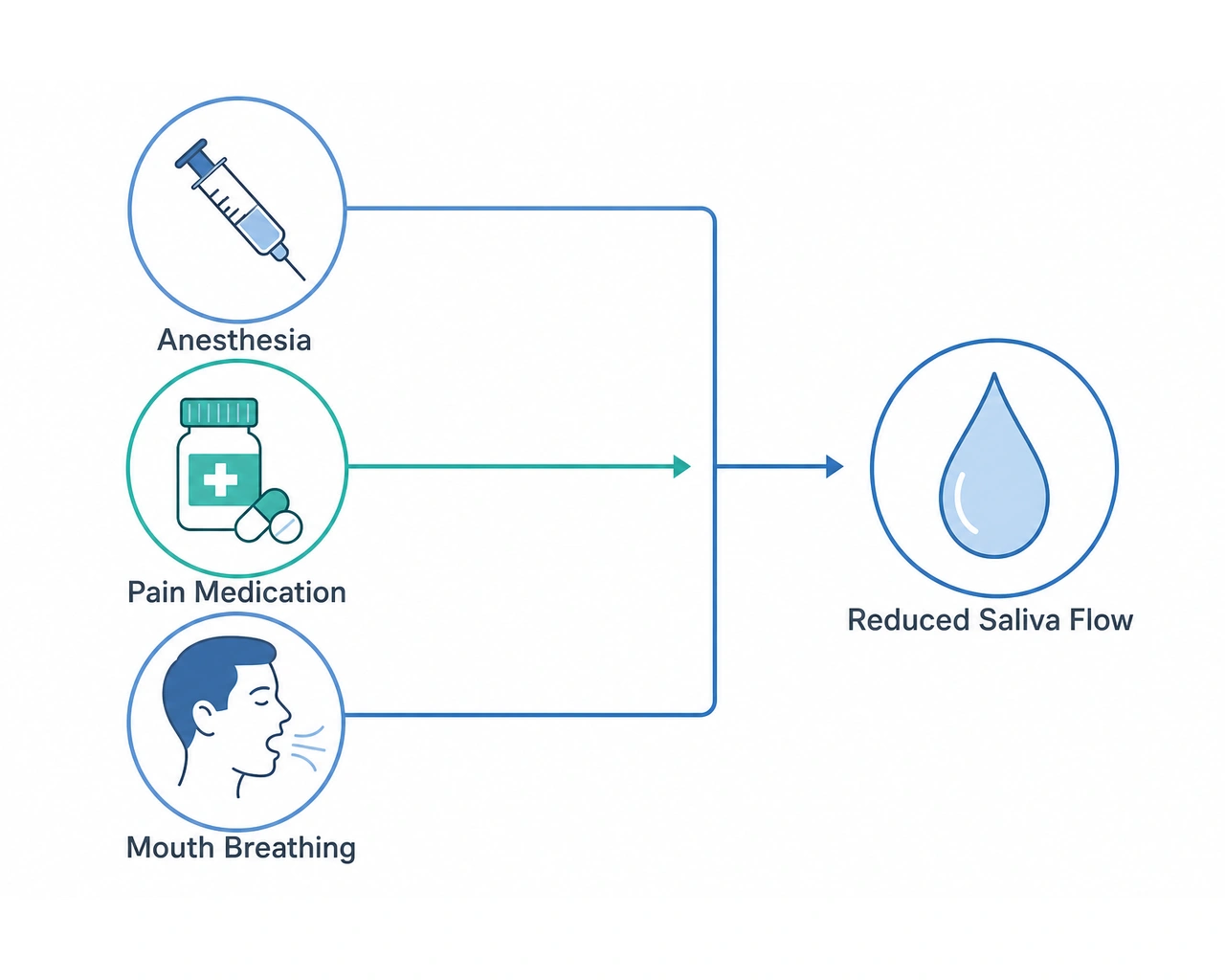
Anesthesia, pain medication, and mouth breathing cause most dry mouth after a tooth extraction. Each one slows saliva flow through a different path.
You can also get dry mouth after dental work like a cleaning or a filling. The cause is the same drop in saliva.
Anesthesia and Sedation
Local anesthesia blocks the nerve signals that tell your salivary glands to produce saliva. Saliva flow drops during the procedure and stays low for hours after. According to MedlinePlus, general anesthesia lists dry mouth as a side effect that wears off within a few hours.
Dentists use general anesthesia for wisdom teeth and complex extractions. Many people under full sedation notice dry mouth for most of the first day.
Pain Medications
Opioids and antihistamines are common prescriptions after an extraction. Both reduce saliva production. According to the American Dental Association, over 100 medications have strong-to-moderate evidence of causing dry mouth.
That range covers the painkillers and allergy drugs many people take during recovery. The dryness lasts as long as you take the medication. Ask your dentist about other options if dry mouth gets worse.
Mouth Breathing During Recovery
Swelling and gauze packing after an extraction force many people to breathe through the mouth. Mouth breathing dries oral tissue faster than breathing through your nose.
Dry lips after dental work come from the same mouth breathing. Both effects ease as swelling goes down over the first few days.
Sleep makes the dryness worse. Most people stop nose breathing once they drift off. Stress during recovery can cut saliva flow further.
How Long Does Dry Mouth Last After Extraction
Most dry mouth after a tooth extraction clears within 24 hours. Anesthesia is the usual cause. The effect fades as the drug leaves your body.
Pain medication can stretch the dryness to 1–3 days. Dryness that lasts more than one week is worth a call to your dentist.
This timeline maps post-extraction dry mouth to each stage of recovery.
| Status | Timeframe | What’s Happening | What to Do |
|---|---|---|---|
| Normal | 0–24 hours | Anesthesia wearing off, saliva returning | Sip water, rest, breathe through your nose |
| Normal | 1–3 days | Pain medication reducing saliva flow | Stay hydrated, use xylitol products |
| Monitor | 3–7 days | Dry socket window, not the same as dry mouth | Note any pain, foul taste, or fever |
| Consult | 1–2 weeks | Not typical, may signal a medication side effect | Contact your dentist |
| Urgent | Months+ | Rare, possible nerve or chronic medication effect | See your dentist for evaluation |
Dry mouth that follows this pattern needs no treatment beyond comfort care.
Dry Mouth vs Dry Socket
Dry mouth and dry socket are separate conditions. Dry mouth is common and temporary. Dry socket is rare and painful.
According to the Cleveland Clinic, dry socket happens when the blood clot falls out of the extraction site. Only 2–5% of extractions lead to it.
This comparison shows how the two conditions differ.
| Feature | Dry Mouth | Dry Socket |
|---|---|---|
| What it is | Reduced saliva flow after the procedure | Blood clot loss at the extraction site |
| When it starts | Within hours of the procedure | Days 1–3 after extraction |
| Key symptoms | Dry, sticky feeling in mouth and throat | Severe throbbing pain, visible bone, foul taste |
| How common | Most people feel some degree | 2–5% of extractions, 20–40% for wisdom teeth |
| Duration | Hours to days | 7–10 days without treatment |
| What to do | Stay hydrated, use xylitol products | Call your dentist right away |
Dry mouth does not cause dry socket. The clot comes loose from suction or force, not from a dry mouth.
Why Dry Mouth Slows Healing
Saliva keeps the mouth at a healthy pH above 5.5. Below that line, acid starts to erode enamel. Saliva also carries proteins that fight the bacteria behind tooth decay.
An extraction wound is open tissue. The blood clot at the site needs constant protection from acid and bacteria. Low saliva strips that defense away when the wound is most vulnerable.
According to a 2026 systematic review, people with chronic dry mouth face 2.6–3x higher dental restoration failure. A healing socket has even less protection. No enamel shields the raw tissue.
The science behind pH-balanced oral care targets this exact problem. A 2017 report found dry mouth products below pH 6.7 can harm teeth. A near-neutral formula matters during recovery.
How to Relieve Dry Mouth After Tooth Extraction
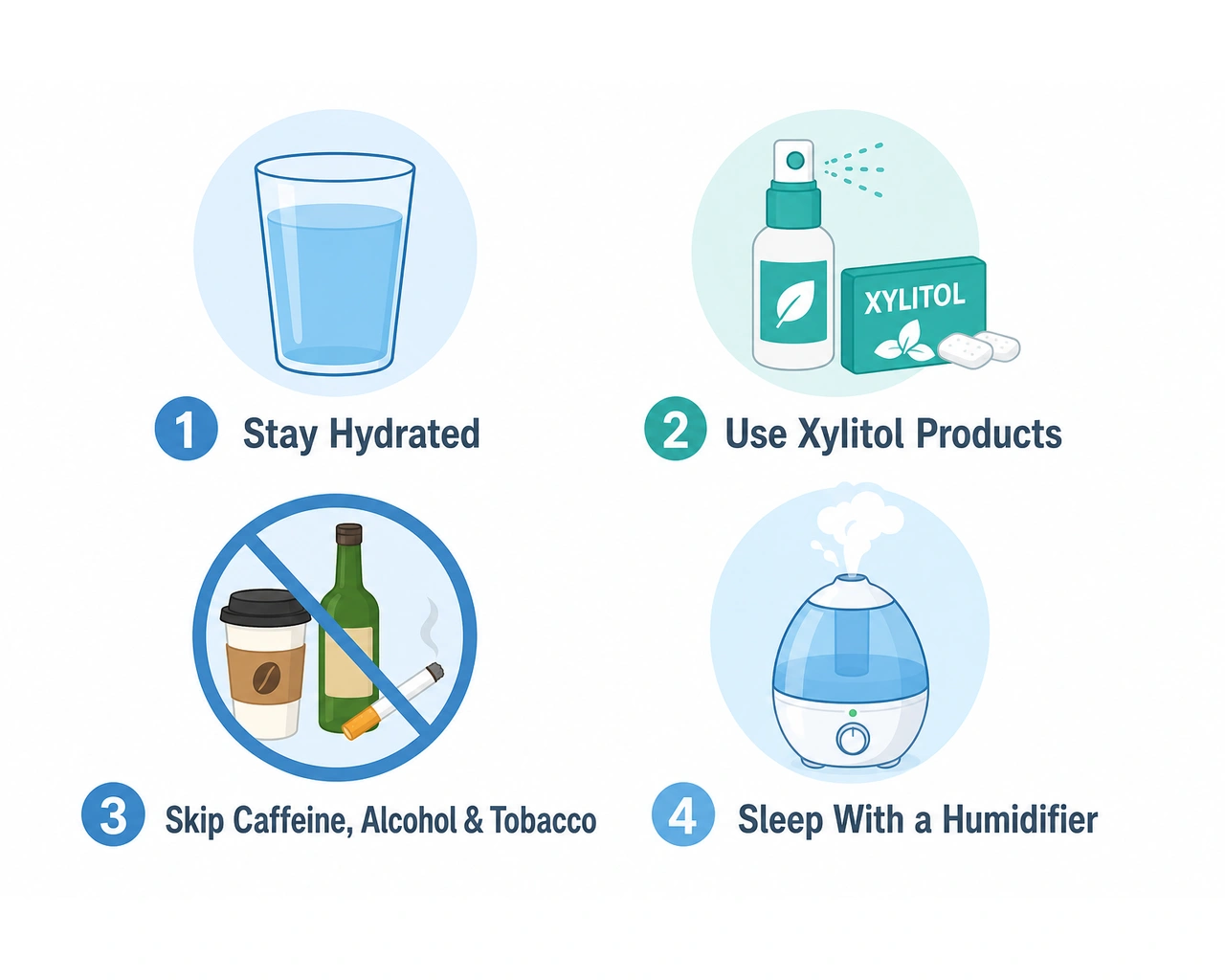
Relief after a tooth extraction has two goals. Protect the blood clot and keep saliva moving.
Four steps handle both. Each one protects the healing site while saliva flow returns.
Stay Hydrated
Sip water in small amounts through the day. Ice chips soothe the area in the first 24 hours. After 24 hours, rinse your mouth with salt water to keep the site clean.
A 2015 Evidence-Based Dentistry review found salt water rinsing cut dry socket rates to 2.5%. People who did not rinse had a 25% rate.
Skip straws for the first week. The suction can pull the blood clot loose.
Use Xylitol Products
Xylitol stimulates saliva and starves the bacteria that cause cavities. A dry mouth spray delivers moisture where the tissue feels driest.
Xylitol breath mints keep saliva moving between meals. A maintenance rinse used twice a day supports oral care through recovery.
Timing matters after an extraction. The blood clot needs about a day to settle first.
According to AAOMS, brush your teerh gently in the first 24 to 48 hours. Keep the brush away from the socket. Start xylitol products once you can rinse and swallow with comfort.
Xylitol gum is fine too. Avoid hard chewing near the extraction site for the first few days.
Learn why xylitol works for dry mouth before you build a recovery routine.
Skip Caffeine, Alcohol, and Tobacco
Caffeine and the tannins in coffee and tea leave the mouth dry. According to the Mayo Clinic, moderate coffee and tea do not dehydrate you. The dry feeling is still real during recovery.
Alcohol dries oral tissue further. Many mouthwashes contain it. An alcohol-free rinse is the safer choice.
Smoking restricts blood flow to the extraction site. The Cleveland Clinic reports that smokers are over three times more likely to develop dry socket. Skip all three until the site heals.
Sleep with a Humidifier
Nighttime is the worst stretch for dry mouth. Most people breathe through the mouth while they sleep. A bedside humidifier adds moisture to the air and eases overnight dryness.
According to the Sleep Foundation, a cool or warm mist both work. You can also raise your head on an extra pillow to reduce swelling and support nose breathing.
Dry Mouth After Wisdom Teeth Removal
Wisdom teeth removal causes more dry mouth than a standard extraction. The procedure runs longer, uses stronger drugs, and creates more swelling.
Longer sedation keeps saliva flow low for a full day or more. Heavy swelling forces mouth breathing for several days. Stronger pain medication, usually an opioid, dries the mouth further.
Dry mouth after root canal work or a dental implant is common too. The pattern traces back to anesthesia, medication, and swelling every time.
For related care, see what to do for an infected wisdom tooth.
When to Call Your Dentist After Dental Work
Call your dentist if dry mouth lasts more than one week. That timeline sits outside the normal range for recovery.
Watch the 3–5 day mark closely. According to the Cleveland Clinic, a few signs point to dry socket rather than normal healing.
- Sharp pain can spread from the socket to your ear or jaw.
- A foul taste or smell rises from the extraction site.
- Bone shows where the blood clot should sit.
A fever or trouble swallowing alongside dry mouth needs prompt care. Report dry mouth that ignores hydration and keeps getting worse.
Your dentist can rule out a medication side effect or a healing problem. Find a CariFree provider near you if symptoms cross these lines.
Protect Your Dental Recovery with CariFree
Saliva is the extraction site’s first line of defense. It guards the blood clot, fights bacteria, and keeps the pH in a safe range.
Take the CariFree Risk Assessment Quiz to find your personal dry mouth risk. Then try CariFree dry mouth products to neutralize your oral pH and reduce cavity risk.
FAQs About Dry Mouth After Tooth Extraction
People ask these questions most during extraction recovery.
Why Is My Mouth So Dry After Tooth Extraction?
Your mouth feels dry after a tooth extraction for three reasons. Anesthesia, pain medication, and mouth breathing each cut saliva flow. The effect is temporary. Most people feel relief within 24 hours.
Does Dry Socket Happen When Your Mouth Is Dry?
Dry socket does not happen because your mouth is dry. Dry socket occurs when the blood clot falls out of the extraction site. Straws, smoking, and spitting are the real risks. A dry mouth feels uncomfortable but does not loosen the clot.
How Long Does Dry Mouth Last After Surgery?
Dry mouth after surgery lasts a few hours to 3 days in most cases. Anesthesia wears off first. Medication-related dryness runs for 1–3 days. See your dentist if the dryness lasts past one week.
Can Wisdom Teeth Cause Dry Mouth?
Wisdom teeth removal causes more dry mouth than a routine extraction. The longer procedure and heavier sedation cut saliva flow for a full day or more. Swelling forces mouth breathing that dries oral tissue faster.
Is It Safe to Swallow Saliva After Tooth Extraction?
Swallowing saliva after a tooth extraction is safe. Saliva carries proteins that fight infection. Straws, smoking, and spitting threaten the clot through suction. Swallowing creates no suction at all.
Does Dry Mouth Cause Tooth Decay?
Yes, dry mouth raises the risk of tooth decay. Saliva washes away bacteria and neutralizes acid. It also delivers minerals that rebuild enamel. Without enough saliva, acid lingers and speeds decay.
Why Are My Lips So Dry After Tooth Extraction?
Your lips feel dry after a tooth extraction because you breathe through your mouth during recovery. Constant airflow over the lips pulls moisture away. Swelling and reduced saliva add to the effect. A lip balm and steady hydration ease the dryness.
Why Are My Lips So Dry After Wisdom Teeth Removal?
Your lips feel dry after wisdom teeth removal because the surgery brings more swelling and longer sedation. Both push you toward mouth breathing for several days. That extended airflow dries the lips more than a routine extraction does. Balm and small sips of water ease it.
Have more questions? Find answers to common questions about dry mouth before your next dental visit.
This article is for general information and is not a substitute for professional dental care. Contact a dentist if you have pain, swelling, or symptoms that concern you after an extraction.