
9 Hydroxyapatite Toothpaste Benefits Backed by Science
Hydroxyapatite makes up 97% of your tooth enamel. Toothpaste made from this same mineral can repair, strengthen, and protect teeth without fluoride.
The use of hydroxyapatite toothpaste is gaining attention for a good reason. Clinical trials now show it prevents cavities as well as fluoride. It also reduces sensitivity, whitens teeth, and is safe to swallow.
This guide covers the evidence-backed benefits of hydroxyapatite toothpaste. You will learn how it works, how it compares to fluoride, what the safety data show, and how to pick the right formula for your oral health goals.
TL;DR
Here is how hydroxyapatite toothpaste helps maintain healthy teeth.
- Remineralizes enamel, reduces sensitivity, whitens teeth, and supports gum health.
- Deposits calcium and phosphate onto damaged enamel to rebuild tooth structure.
- Matches fluoride toothpaste for cavity prevention across 18 clinical studies.
- Meets EU safety standards at concentrations up to 29.5% in toothpaste.
- Eliminates the risk of fluorosis for children and pregnant women.
- Requires nano-sized particles and proper concentration to be effective.
- Pairs pH-balanced, dentist-formulated hydroxyapatite care with CariFree products.
9 Oral Health Benefits of Hydroxyapatite Toothpaste
Hydroxyapatite toothpaste strengthens enamel, prevents cavities, and reduces sensitivity. It does this by replacing the same minerals your teeth lose to acid and bacteria every day.
These hydroxyapatite toothpaste benefits set it apart from standard toothpaste.
1. Remineralizes and Strengthens Tooth Enamel
Hydroxyapatite toothpaste deposits calcium and phosphate onto weakened enamel. These minerals rebuild the structure your teeth lose to acids and bacteria.
The formula is biomimetic. That means it rebuilds enamel using the same naturally occurring mineral found in your teeth. A systematic review of 18 clinical studies found hydroxyapatite toothpaste was 2.51 times more effective than placebo for caries prevention.
Fluoride strengthens enamel through a chemical reaction that forms a different mineral. Hydroxyapatite restores enamel with the same material it lost. This makes enamel erosion repair more natural and complete.
2. Prevents and Reverses Early Cavities
Hydroxyapatite fills microscopic cracks and pores in enamel before they become full cavities. It can also reverse early-stage decay lesions that have not broken through the surface.
White spots on teeth are the first visible sign of decay. Hydroxyapatite remineralizes these spots and stops them from growing into cavities. Once a cavity breaks through enamel into dentin, toothpaste cannot fix it. That damage needs a filling.
The same review found hydroxyapatite comparable to fluoride for cavity prevention. The pooled odds ratio was 1.1, with no significant difference between the two.
An in situ study confirmed these results. 10% hydroxyapatite toothpaste achieved 55.8% remineralization versus 56.9% for fluoride.
3. Reduces Tooth Sensitivity
Hydroxyapatite coats exposed dentin and seals open tubules that send pain signals to the nerves.
When enamel thins or gums recede, tiny channels called dentinal tubules become exposed. Hot, cold, and sweet foods cause fluid to move within these channels. That movement triggers the nerve and creates pain.
Hydroxyapatite particles are small enough to enter these tubules. They crystallize inside and form a mineral plug that blocks fluid movement and stops pain.
A meta-analysis of 44 clinical trials found hydroxyapatite reduced tooth sensitivity by 39.5% compared to a placebo. It also outperformed fluoride by 23% for sensitivity relief. Most users noticed results within two to four weeks of regular use.
4. Supports Natural Teeth Whitening
Hydroxyapatite fills tiny cracks on the enamel surface. This creates a smoother finish that reflects more light. Your teeth look brighter without bleach or harsh chemicals.
Thin enamel lets the yellow layer beneath show through. Hydroxyapatite adds a white, opaque mineral coat that hides the yellow tone. The effect builds over several weeks of daily use.
Unlike peroxide or charcoal products, hydroxyapatite strengthens enamel while it whitens. A review of 17 studies confirmed that hydroxyapatite toothpaste whitens teeth with steady use. A lab study found it removed stains better than blue covarine toothpaste after 30 seconds of brushing.
5. Protects the Oral Microbiome
Your mouth needs good bacteria to stay healthy. Most rinses and some toothpastes kill all bacteria, good and bad alike. Hydroxyapatite takes a different approach.
Hydroxyapatite creates a physical barrier on the enamel surface. Bad bacteria cannot attach and form colonies. But good bacteria stay alive and intact. A study found hydroxyapatite reduced bacterial attachment as well as chlorhexidine, the gold standard antimicrobial. It did this without killing a single bacterium.
This balance matters for long-term oral health. Products that wipe out all bacteria can upset the natural balance in your mouth. Hydroxyapatite keeps that balance in check while still blocking the bacteria that cause decay.
6. Provides a Non-Toxic Fluoride Alternative
Hydroxyapatite is biocompatible and non-toxic. Your body already produces it as the main building block of teeth and bones.
Fluoride is safe when used as directed. But overuse can cause dental fluorosis, a condition that stains and pits tooth enamel.
Young children often swallow toothpaste instead of spitting it out. Swallowed hydroxyapatite breaks down into calcium and phosphate in the stomach. These are minerals your body already uses every day.
For people who prefer fluoride-free oral care, hydroxyapatite offers comparable cavity protection. It gives families a non-toxic option without giving up the science-backed results they need.
7. Builds Acid Resistance in Teeth
Every meal exposes your teeth to acid. Citrus, soda, coffee, and bacteria all attack enamel. Hydroxyapatite adds an extra mineral layer that absorbs this damage first.
Think of it as a shield. Acids dissolve the hydroxyapatite layer before they reach your natural enamel underneath. An in situ study confirmed this effect. Sound enamel showed no decay when treated with hydroxyapatite toothpaste, even after acid exposure.
This acid-buffering effect also supports a more neutral pH in your mouth. A neutral pH slows the mineral loss that leads to cavities and erosion. The result is teeth that hold up better against daily wear.
8. Promotes Healthier Gums
Hydroxyapatite toothpaste may improve gum health alongside its enamel benefits. Early research indicates reduced bleeding and improved plaque control near the gumline.
A randomized trial tested microcrystalline hydroxyapatite toothpaste on periodontal patients. Users showed less gum bleeding and shallower pocket depth compared to controls. Plaque scores dropped as well.
These findings are promising but still early. Larger trials would strengthen the case for gum-specific benefits. Still, the results suggest hydroxyapatite does more for your mouth than standard toothpaste.
9. Fights Plaque Buildup on Teeth
Hydroxyapatite creates a protective barrier on enamel that blocks plaque-forming bacteria from bonding to tooth surfaces. This is different from the microbiome benefit covered above. That section focused on preserving good bacteria. This one is about stopping bad bacteria from gaining a foothold.
The mechanism is physical, not chemical. Hydroxyapatite particles bind to the enamel surface and leave less room for bacteria to attach. In an 18-month clinical trial, plaque scores dropped at the same rate for hydroxyapatite and fluoride users.
Less plaque means less tartar buildup over time. Lower tartar levels reduce your risk of gum disease. These benefits compound with daily use, which is why consistent brushing matters.
What Is Hydroxyapatite Toothpaste?
Hydroxyapatite toothpaste is an oral care product that uses synthetic calcium phosphate to repair and strengthen tooth enamel. The active ingredient is the same mineral that makes up 97% of enamel and 70% of dentin.
Hydroxyapatite rebuilds enamel with the same material your teeth already contain. This biomimetic approach makes hydroxyapatite a natural alternative to fluoride toothpaste.
Hydroxyapatite toothpaste comes in two forms. Nano-hydroxyapatite uses particles small enough to penetrate the enamel pores and seal dentinal tubules. Micro-hydroxyapatite uses larger particles that sit on the tooth surface.
Also Read: Nano-Hydroxyapatite Toothpaste: Evidence-Based Guide
How Does Hydroxyapatite Toothpaste Work
Hydroxyapatite toothpaste works by depositing a mineral layer onto tooth enamel. The layer fills weak spots, repairs damage, and adds a shield against future acid attacks.
The process follows three steps:
- Bond. Hydroxyapatite particles attach to areas where enamel has lost minerals. They lock in because they share the same crystal structure as your teeth.
- Fill. The particles pack into pores and micro-cracks that would otherwise trap acid-producing bacteria.
- Shield. The new mineral layer takes the hit when acids strike. It wears down before your natural enamel does.
Brushing deposits the particles onto your teeth. Spitting without rinsing gives them more time to bond and fill. The longer hydroxyapatite stays on your enamel, the deeper the repair.
Not all hydroxyapatite toothpastes perform the same way. Particle size and concentration affect how well each step works.
Nano-Hydroxyapatite vs Hydroxyapatite Toothpaste
Nano-hydroxyapatite uses particles small enough to penetrate enamel pores and dentinal tubules. Standard hydroxyapatite uses larger particles that sit on the tooth surface. Particle size is what separates the two.
The table below compares the differences between nano-hydroxyapatite and hydroxyapatite:
| Feature | Nano-Hydroxyapatite | Standard Hydroxyapatite |
|---|---|---|
| Particle Size | Under 100 nanometers | 1 to 100 micrometers |
| Enamel Penetration | Reaches sub-surface pores | Stays on the outer surface |
| Surface Area | Higher mineral delivery | Lower mineral delivery |
| Tubule Access | Enters and seals tubules | Too large to enter tubules |
| Primary Use | Toothpaste and oral care | Bone grafts and implant coatings |
| Clinical Evidence | Stronger for oral care | Limited for oral care |
Natural enamel crystals measure 5 to 20 nanometers. At 20 to 100 nanometers, nano-hydroxyapatite particles come closest to that range. A closer match means the particles integrate deeper into your tooth structure and form stronger bonds.
Is nano-hydroxyapatite better than regular hydroxyapatite? For toothpaste, yes. Nano particles are small enough to enter enamel pores and dentinal tubules that standard particles cannot reach.
Try CariFree Gel 1100. It pairs nano-hydroxyapatite with pH+ technology to remineralize teeth and neutralize acids.
Hydroxyapatite vs Fluoride Toothpaste
Hydroxyapatite and fluoride both prevent cavities and remineralize enamel. But they protect your teeth in different ways.
The table below compares the differences between fluoride and hydroxyapatite:
| Factor | Hydroxyapatite Toothpaste | Fluoride Toothpaste |
|---|---|---|
| How It Works | Deposits calcium phosphate onto enamel | Converts enamel minerals into fluorapatite |
| Remineralization | Rebuilds with the same mineral as enamel | Creates a harder but different mineral |
| Cavity Prevention | Comparable to fluoride in clinical trials | Gold standard with 70+ years of evidence |
| Safety If Swallowed | Non-toxic at any concentration | Toxic in large amounts (fluorosis risk) |
| FDA/ADA Status | No FDA approval or ADA Seal | FDA-approved with ADA Seal of Acceptance |
| Oral Microbiome | Preserves good bacteria | Can disrupt bacterial balance |
| Cost Per Tube | $8 to $22 | $1 to $6 |
| Best For | Children, sensitivity, fluoride-free seekers | General prevention, high-risk patients |
Is hydroxyapatite better than fluoride? Neither option is better in every case. Clinical trials show comparable cavity prevention rates.
Hydroxyapatite has clear safety advantages. It’s non-toxic, carries no fluorosis risk, and preserves oral bacteria balance. Fluoride has a longer track record and full FDA and ADA backing.
Your best choice depends on your priorities. Families with young children may prefer hydroxyapatite for its swallowing safety. People with high cavity risk may prefer fluoride for its decades of evidence.
You don’t have to choose one or the other. CariFree Gel 1100 combines fluoride with nano-hydroxyapatite in one formula for dual protection.
Also Read: Hydroxyapatite vs Fluoride Toothpaste
Is Hydroxyapatite Toothpaste Safe
Hydroxyapatite toothpaste is safe to use. The EU Scientific Committee on Consumer Safety (SCCS) confirmed this in its 2025 final opinion. The committee cleared nano-hydroxyapatite at concentrations up to 29.5% in toothpaste and up to 10% in mouthwash.
The SCCS found no evidence of DNA damage, cell harm, or inflammation. Any nano-hydroxyapatite swallowed during brushing dissolves in stomach acid. The body absorbs the released calcium and phosphate as normal minerals.
Not all nano-hydroxyapatite is made the same. The EU approved only certain particle types as safe. Reputable brands like CariFree use particles that meet these safety standards.
The FDA has not approved hydroxyapatite toothpaste for cavity prevention. The FDA currently approves only fluoride toothpaste for anti-cavity claims.
The lack of FDA approval does not mean hydroxyapatite is unsafe. It means the ingredient has not gone through the FDA review process. No clinical trial on hydroxyapatite toothpaste has reported a single adverse health event.
Hydroxyapatite for Children and Pregnant Women
Hydroxyapatite toothpaste is safe for children and pregnant women. It carries no toxicity risk if swallowed and eliminates the chance of dental fluorosis.
Young children swallow toothpaste instead of spitting it out. The CDC found that kids routinely use more toothpaste than recommended. With fluoride toothpaste, that means more fluoride intake than intended. About 41% of US adolescents ages 12 to 15 show some degree of dental fluorosis from overexposure.
Hydroxyapatite removes that risk. Swallowed particles dissolve into calcium and phosphate. Your body already uses both minerals every day. No amount of swallowed hydroxyapatite toothpaste has shown harm in any clinical trial.
The same safety profile applies during pregnancy. Pregnant women deal with nausea, sensitive gums, and a stronger gag reflex. A non-toxic toothpaste makes brushing easier during those months. Hydroxyapatite has no known issues for use during pregnancy.
Try CariFree Naturals Kids Toothpaste for a safe daily option the whole family can use.
How to Choose a Hydroxyapatite Toothpaste
Not all hydroxyapatite toothpastes are equal. Five factors separate an effective product from a weak one.
Check the Particle Size
Look for “nano-hydroxyapatite” or “n-HAp” on the label. Nano particles penetrate enamel pores and seal tubules.
Larger particles sit on the surface and miss sub-surface damage. The EU safety approval also requires rod-shaped particles. Avoid products that do not specify particle type.
Look for the Right Concentration
Effective HAp toothpastes use concentrations of 5% to 10%. Most clinical trials used 10% nano-hydroxyapatite.
Higher is not always better. What matters is the nanoparticle size at an adequate concentration. Avoid products that list HAp far down the ingredient label.
Verify pH-Elevating Ingredients
An acidic mouth speeds up mineral loss. Look for ingredients that raise oral pH toward neutral or above.
Xylitol, baking soda, and pH-buffering systems all help neutralize acid. A toothpaste that repairs enamel and controls acid works on two fronts.
Avoid Harsh Additives
Skip toothpastes with sodium lauryl sulfate (SLS), alcohol, or abrasive whitening agents. SLS irritates gums and can trigger canker sores.
Alcohol dries your mouth and reduces saliva flow. Abrasive agents wear down the enamel that HAp is trying to repair.
Match the Formula to Your Oral Health Goals
Sensitivity relief, whitening, cavity prevention, and child safety may each call for a different formula.
Consider a broad-spectrum HAp toothpaste if you have more than one concern. The best formulas cover remineralization, pH balance, and bacterial control in one product.
Choose CariFree for Nano-Hydroxyapatite Oral Care
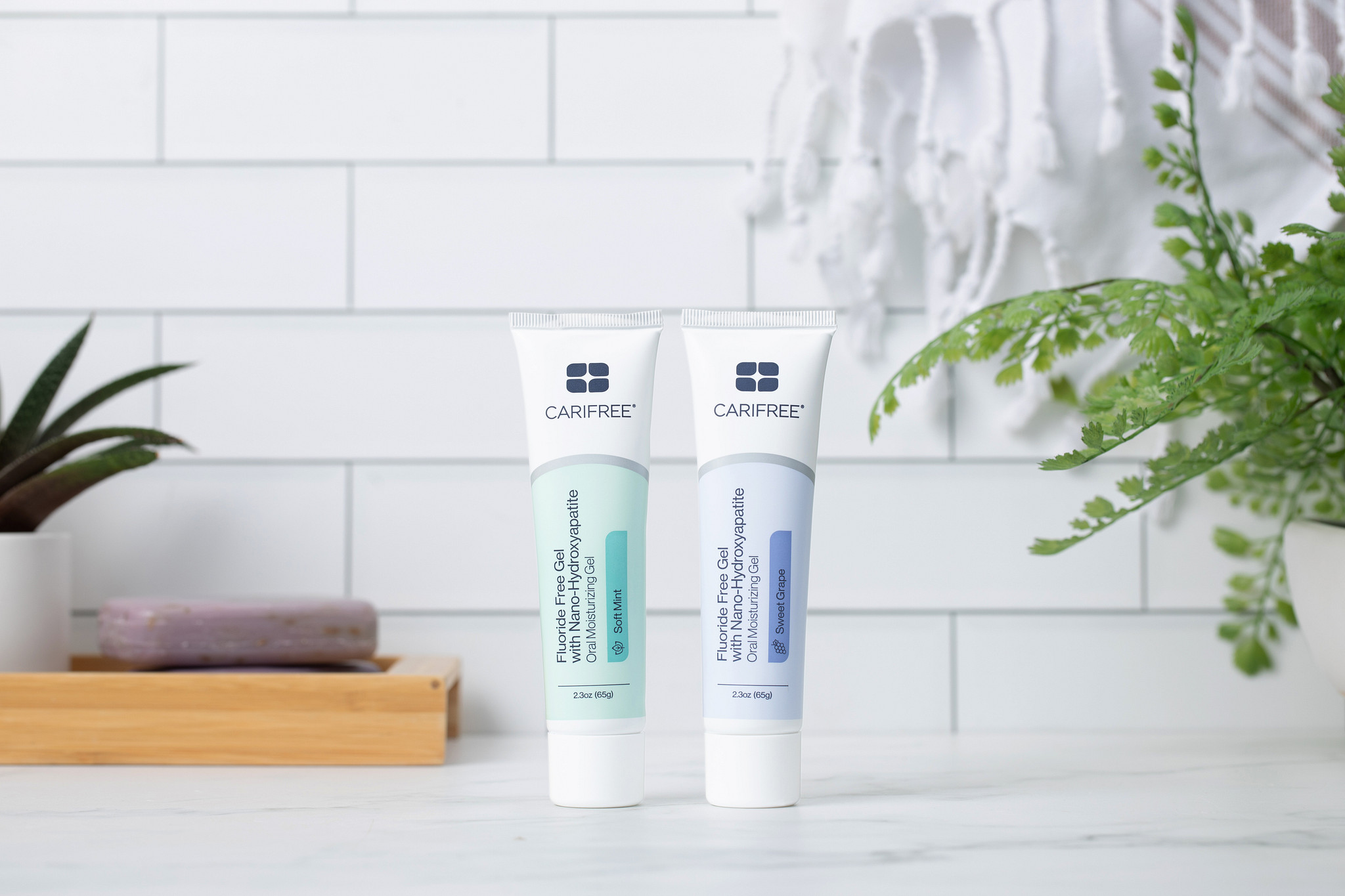
CariFree uses nano-hydroxyapatite at effective concentrations with pH+ technology and no harsh additives. Dr. V. Kim Kutsch founded CariFree after decades of caries research.
CariFree offers two options for daily use:
- CariFree Gel 1100: Combines 1,100 ppm fluoride with nano-hydroxyapatite for dual-action protection. Best for people who want both ingredients.
- CariFree Fluoride Free Gel: Uses nano-hydroxyapatite without fluoride. Best for those seeking a fluoride-free option.
Both formulas use nanoXIM by Fluidinova. It’s the only approved source of nano-hydroxyapatite in oral care products from the EU Scientific Committee on Consumer Safety.
Learn more about the science behind CariFree.
FAQs About Hydroxyapatite Toothpaste
Quick answers to common questions about hydroxyapatite toothpaste benefits, uses, and safety.
Does Hydroxyapatite Toothpaste Work?
Yes. Hydroxyapatite toothpaste works by bonding to enamel and repairing damage at the mineral level. Clinical trials show it prevents cavities as well as fluoride. It also seals exposed tubules to reduce tooth sensitivity.
Does the ADA Approve Hydroxyapatite Toothpaste?
No. The American Dental Association gives its Seal of Acceptance only to fluoride toothpaste. This does not mean hydroxyapatite is unsafe or ineffective. Hydroxyapatite has not gone through the ADA review process. Clinical trials show it performs comparably to fluoride for cavity prevention.
How Do You Use Hydroxyapatite Toothpaste?
Use hydroxyapatite toothpaste the same way you would use any toothpaste. Apply a pea-sized amount to a soft-bristle brush. Brush for two minutes, twice daily. Spit out the excess but do not rinse with water. Leaving a thin film on your teeth gives hydroxyapatite more time to bond to enamel.
How Long Does Hydroxyapatite Toothpaste Take to Work?
Hydroxyapatite starts bonding to enamel right after brushing. Most people notice reduced sensitivity within two to four weeks. Visible whitening takes four to eight weeks of steady use. Results depend on brushing habits and diet.
Can Hydroxyapatite Reverse Cavities?
Hydroxyapatite can reverse early-stage enamel damage like white spot lesions. It cannot reverse cavities that have broken through enamel into dentin. At that stage, you need professional treatment. Learn more about how to reverse a cavity.
Does Hydroxyapatite Whiten Teeth?
Yes. Hydroxyapatite fills surface cracks on enamel with white, opaque mineral particles. The smoother surface reflects more light and masks the yellow of dentin beneath. The whitening effect is gradual and non-abrasive.
Can You Use Hydroxyapatite and Fluoride Together?
Yes. You can alternate between hydroxyapatite and fluoride toothpaste. You can also use a product that contains both. CariFree Gel 1100 combines fluoride with nano-hydroxyapatite in one formula.
What Are the Downsides of Hydroxyapatite Toothpaste?
The main downsides are cost and access. Hydroxyapatite toothpaste costs more than fluoride toothpaste. Fewer stores carry it. It also lacks FDA approval and the ADA Seal. From a safety and performance standpoint, clinical research has found no significant downsides.